
Taiwan has become one of Asia’s most popular destinations for factory workers, especially migrant workers from Southeast Asia. With a strong manufacturing sector, stable economy, and strict labor laws, factory jobs in Taiwan are often seen as reliable and legally protected. However, many workers and job seekers misunderstand how much factory workers actually earn once deductions, overtime, and living costs are considered.
Complete breakdown of factory worker salaries in Taiwan, including minimum wage, average earnings, overtime pay, deductions, benefits, and real take-home income. Whether you are planning to work in Taiwan or researching labor conditions, this guide will give you a clear and realistic picture.
Overview of Factory Work in Taiwan
Taiwan is a global manufacturing hub, particularly known for electronics and semiconductor production. Factory work in Taiwan is divided across several industries:
Common Factory Industries
- Electronics and semiconductor manufacturing
- Machinery and metal processing
- Textile and garment production
- Food processing and packaging
- Plastic and chemical manufacturing
Who Works in Taiwanese Factories?
- Local Taiwanese workers
- Migrant workers from Indonesia, Vietnam, the Philippines, Thailand, and other countries
Typical Job Roles
- Assembly line worker
- Machine operator
- Quality control inspector
- Packaging and logistics worker
- Maintenance assistant
Most factory jobs are contract-based, especially for foreign workers, with contracts typically lasting 2–3 years, and unlike roles where pay fluctuates based on experience and routes such as seaman salary, factory wages are usually fixed for the duration of the contract.
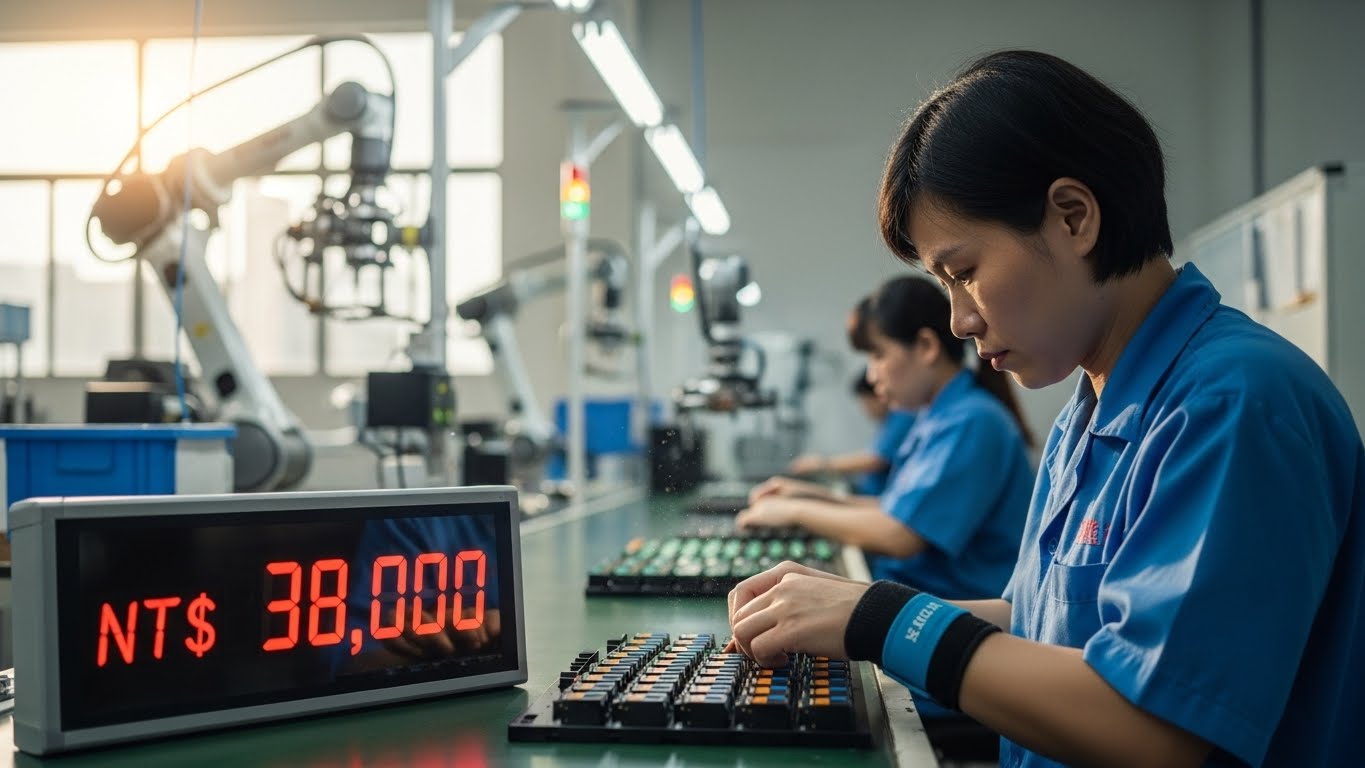
Legal Minimum Wage in Taiwan
Taiwan has a legally enforced minimum wage that applies to both local and foreign workers.
Minimum Wage Structure
- Monthly minimum wage: Applies to full-time workers
- Hourly minimum wage: Applies to part-time or hourly workers
The minimum wage is reviewed and adjusted periodically by the government. Employers are legally required to comply, and violations can result in penalties.
It is important to note that minimum wage refers to gross salary, not the amount workers take home after deductions.
Average Factory Worker Salary in Taiwan
General Salary Range
- Entry-level factory workers: Around the minimum wage level
- Average factory workers: Slightly above minimum wage due to overtime
- Experienced or skilled workers: Higher than average, depending on role
Most factory workers earn a base salary close to the minimum wage, with total earnings increased through overtime, night shifts, and bonuses.
Salary by Factory Type
Not all factories pay the same. Salary levels vary by industry due to skill requirements and profitability.
Electronics & Semiconductor Factories
- Higher wages
- Longer working hours
- More overtime opportunities
- Higher production pressure
Machinery & Metal Factories
- Moderate to high wages
- Skill-based roles rewarded
Textile & Food Processing Factories
- Lower base wages
- More stable schedules
- Less overtime compared to electronics factories
Salary by Experience and Skill Level
Entry-Level Workers (0–1 Year)
- Paid close to minimum wage
- Basic tasks with limited responsibility
Semi-Skilled Workers (2–5 Years)
- Slightly higher base pay
- More consistent overtime
- Better shift options
Skilled Workers & Technicians
- Significantly higher wages
- Machine operation or maintenance skills
- Often receive allowances
Supervisors & Team Leaders
- Higher salaries
- Leadership responsibilities
- Often bilingual (Mandarin + native language)
Skills such as technical training, machine operation, and Mandarin language ability can significantly increase earning potential.
Working Hours, Overtime, and Pay Rates
Standard Working Hours
- 8 hours per day
- 40 hours per week
Overtime
- Paid at higher rates than normal hours
- Weekends and holidays pay more
- Night shifts often include extra allowances
For many factory workers, overtime accounts for a large portion of monthly income, sometimes making the difference between basic survival and meaningful savings.
Salary Deductions and Net Take-Home Pay
One of the most misunderstood aspects of factory work in Taiwan is salary deductions.
Common Deductions
- Labor insurance
- National health insurance
- Income tax
- Dormitory rent
- Meals
- Broker or agency fees (for foreign workers)
Example Breakdown (Illustrative)
- Gross salary: 30,000
- Total deductions: 4,000–6,000
- Net take-home pay: 24,000–26,000
Actual figures vary depending on overtime, housing, and employer policies.
Benefits Beyond Salary
In addition to a cash salary, many factory workers receive benefits that reduce living expenses.
Common Benefits
- Free or subsidized dormitory housing
- Free or low-cost meals
- Transportation to and from work
- Paid annual leave
- National health insurance coverage
- Contract completion or renewal bonuses
These benefits can significantly improve overall financial stability.
Cost of Living vs Salary
Major Living Costs
- Housing (often low due to dormitories)
- Food (canteens reduce costs)
- Transportation (often provided)
- Personal expenses
Workers living in factory dormitories generally spend far less than those renting privately. As a result, many factory workers are able to save a portion of their income, especially if overtime is consistent.
Salary Comparison: Taiwan vs Other Countries
Compared to other popular destinations for factory workers:
- Japan & South Korea: Higher wages but much higher living costs
- China: Competitive wages in some regions but fewer protections
- Vietnam & Malaysia: Lower wages but lower living costs
Taiwan stands out for its strong labor laws, reliable pay, and healthcare coverage, making it an attractive balance between income and stability.
Challenges Faced by Factory Workers
Despite the benefits, factory work in Taiwan is not without challenges.
Common Issues
- Long working hours and physical fatigue
- Repetitive tasks
- Language barriers for foreign workers
- Homesickness and cultural adjustment
- Limited ability to change employers under certain contracts
Understanding these challenges helps set realistic expectations.
Future Salary Trends and Policy Changes
Taiwan faces labor shortages in manufacturing, which may lead to:
- Gradual minimum wage increases
- Higher demand for skilled workers
- Improved conditions for migrant workers
Automation may reduce demand for low-skilled labor, while increasing pay for technically skilled roles.
Factory worker salaries in Taiwan may not seem high at first glance, but when combined with overtime opportunities, benefits, and relatively controlled living costs, they offer stable and predictable income. Taiwan’s strong labor protections, healthcare system, and demand for factory labor make it a reliable choice for workers seeking legal employment abroad.
For those willing to work hard and manage expenses carefully, factory jobs in Taiwan can provide financial stability, savings opportunities, and valuable international work experience.
FAQs
How much can a factory worker save per month in Taiwan?
Savings depend on overtime and lifestyle, but many workers save a portion of their income each month.
Do foreign workers receive the same minimum wage as locals?
Yes, by law, minimum wage applies to all workers.
Is overtime mandatory?
Overtime policies vary by factory, but workers are generally compensated according to labor laws.
Are factory jobs safe in Taiwan?
Taiwan has strong workplace safety regulations, though factory work can still be physically demanding.
Can factory workers change employers?
This depends on contract terms and government regulations, especially for foreign workers.