Category: Blog

  • SSS Pension Rules 2026 Updates

    SSS Pension Rules 2026 Updates

    For 2026, the Social Security System (SSS) has made some changes. Some are good, some might pinch your wallet a bit now, but all of them aim to make retirement more secure in the long run.

    Let’s break it down in the simplest way possible, no technical talk, just straight-up answers to the things you really want to know.

    Why Should You Care About the SSS Pension?

    The truth is, not everyone in the Philippines gets to retire with millions in the bank. For most of us, the SSS pension is the fallback plan, the money you’ll rely on when you’re no longer working.

    It’s not meant to make you rich, but it’s there to make sure you don’t go hungry or end up depending completely on your kids when you’re old.

    That’s why knowing the new SSS rules for 2026 is super important. After reviewing the key pension guidelines, it’s equally useful to check the SSS payment schedule to know exactly when your monthly benefits will be released.
    SSS Pension Rules 2025 Updates

    What’s New With the SSS in 2026?

    Let’s go over the real changes that affect your pocket and your future.

    1. Contribution Rate Goes Up to 15%

    Yes, you read that right. Starting this year, the contribution rate has increased from 14% to 15% of your salary.

    Who pays this?

    • If you’re employed: Don’t panic, you won’t pay the whole 15%. Your boss still shares the cost. You pay part, they pay part.

    • If you’re self-employed, an OFW, or a voluntary member: Sorry to say, but you’ll have to pay the entire 15% on your own.

    It might sting now, but remember this higher contribution means you’re building a bigger retirement fund for yourself.

    2. New Salary Credit Bracket

    The Monthly Salary Credit (MSC) is basically the SSS’s way of calculating how much you’ll pay and how much you’ll eventually receive.

    For 2026, here’s the updated range:

    • Minimum MSC: ₱5,000

    • Maximum MSC: ₱35,000

    So if you’re earning more than ₱35,000 a month, you’ll still only contribute based on ₱35,000.

    3. Pension Computation Stays the Same (But the Result Is Better)

    The formula for computing pensions hasn’t changed, but since you’re paying higher contributions now, your future pension will be higher compared to what you would’ve gotten in previous years.

    How does it work?

    Here’s a basic idea:

    Let’s say you’re paying for 30 years, and your average salary credit is ₱20,000.

    • Base calculation: ₱300 + 20% of ₱20,000 = ₱4,300

    • Additional: For every year beyond 10 years, you get 2% more. So if you’ve worked 30 years, that’s 20 years × 2% = 40%. That’s 40% of ₱20,000 = ₱8,000

    • Government bonus: Add ₱1,000 (this is the extra monthly benefit added a few years back)

    Your total monthly pension could be around ₱13,300.

    That’s not bad, especially if you combine it with personal savings or investments.

    4. Most SSS Transactions Are Now Online

    Let’s be honest—lining up at SSS branches is stressful. Good news: In 2026, most services can now be done online.

    Here’s what you can do online now:

    • Apply for retirement or disability

    • Check your contribution records

    • Update your personal information

    • File claims or loans

    • Book appointments (if you still need to visit)

    No need to take a whole day off work just to get things done. Just use the My.SSS Portal or download the SSS Mobile App.

    5. Retirement Age Remains the Same

    Some people were worried about this, but no it hasn’t changed.

    • 60 years old – Optional retirement if you stop working

    • 65 years old – Mandatory retirement whether you stop working or not

    If you work until 65, your pension might be higher because of the extra contributions.

    6. Disability and Death Benefits Adjusted

    If you become permanently disabled or pass away, the SSS will pay either:

    • A monthly pension

    • Or a lump sum payout, if you didn’t meet the minimum number of contribution years

    For 2026, these amounts have been increased slightly to keep up with inflation. It won’t make anyone rich, but at least your family will get a little more support compared to before.

    7. Annual Confirmation of Pensioners (ACOP) Now Online

    If you’re already retired and receiving a pension, you still need to do the ACOP (Annual Confirmation of Pensioners).

    But here’s the good news: You can now do this online. No more hassle of visiting the branch in person, especially helpful for senior citizens who don’t like commuting or waiting in line.

    Why Are These Changes Happening?

    Simple reason: SSS wants to keep the fund alive for everyone.

    With people living longer and the cost of living going up, they need to adjust the system so that there’s still money left for future retirees.

    At the same time, moving everything online helps make the process easier for members like you. Less paperwork, fewer lines, more convenience.

    Will my pension increase right away?

    If you’re already retired, no, the new rates won’t affect you. But for people still paying now, it means a higher pension when it’s your turn to retire.

    What if I’m an OFW? Can I still pay?

    Yes! OFWs can pay through partner banks, remittance centers, or the SSS mobile app. It’s better to keep contributing if you want a pension later.

    What happens if I miss payments?

    If you’re self-employed or voluntary and miss payments, you won’t get penalized, but you’ll lose the months you skipped. That means less pension later.

    Do freelancers or small business owners need to pay SSS?

    It’s voluntary, but smart freelancers continue paying. Why? Because there’s no other pension system that’s as affordable and accessible as SSS for self-employed Pinoys.

  • SSS Pension Increase August 2026

    SSS Pension Increase August 2026

    It’s not some big-time windfall, but hey, in times like these, even a small extra amount can really help. For a lot of seniors in the Philippines, this isn’t just about money. It’s about getting through the month without worrying too much about the basics rice, medicine, electricity, or that extra trip to the pharmacy when the doctor says so.

    Let’s break it down in the simplest way possible, just like how you’d explain it to your cousin over coffee or while waiting for your number to be called at the bank.

    What’s This Pension Increase All About?

    Every few years, the SSS reviews the pension rates because, well, prices keep going up.

    The last time they did this, a lot of retirees were asking for more help because the reality is, the usual pension amount just isn’t enough anymore.

    That’s why starting August 2026, the SSS added ₱1,000 to everyone’s monthly pension. It doesn’t matter if you’re getting the minimum or the maximum, everyone gets an additional ₱1,000 per month.

    Here’s How It Works

    Let’s say you were receiving ₱5,000 before. Now it’s ₱6,000.
    If you were getting ₱18,000 before (that’s the max, by the way), now it’s ₱19,000.

    That’s it, plain and simple.

    Previous Pension New Pension (August 2026)
    ₱5,000 ₱6,000
    ₱10,000 ₱11,000
    ₱18,000 ₱19,000

    Who Gets This Increase?

    If you’re already receiving SSS pension payments, you don’t need to sign any forms or make a new request.
    The increase is automatic.

    It covers:

    • Retirement pensioners

    • Disability pensioners

    • Survivors or dependents of deceased SSS members

    Even if you’re in the province or out of the country, as long as you’re part of the pension system, this increase applies to you.

    When Will You Actually Receive It?

    The new pension rates started in August 2026, but for some people, it showed up in their accounts in June or July because of processing times.
    That’s normal. Some banks are just a little slower than others. But rest assured, you’ll get the increase.

    How Do You Know If It’s There?

    Don’t overthink it.
    Just check the same way you always do:

    • Visit an ATM

    • Check your online bank app

    • Look at your passbook (if you’re still using one)

    • Or log in to the My.SSS portal online

    You’ll see the difference right away when the extra amount is credited.

    Why Is This Increase Important?

    For a lot of seniors, an extra ₱1,000 August not seem like much to younger folks, but to someone living on a fixed pension, it can cover a lot:

    • A few weeks’ worth of rice

    • Maintenance medicine for hypertension or diabetes

    • Part of your electric bill

    • A visit to the doctor

    • Or just peace of mind—knowing you’ve got a bit more breathing room

    What About the Future, Will There Be More Increases?

    That’s a tricky question. Right now, there’s no official plan for another increase soon.
    But there are talks. Some groups are pushing for more adjustments, especially since life in the Philippines keeps getting pricier.

    It really depends on whether the SSS fund stays strong and if contribution collections stay steady.

    Where’s the Money Coming From?

    Some people wonder, “How can SSS afford this?”
    Here’s the straightforward answer:

    • Member contributions (this is why rates went up in 2026)

    • Investments (SSS invests in stocks, real estate, and government bonds)

    • Loan payments and penalties from members who borrowed and paid back

    So yes, they’re using the money wisely (hopefully), but it’s a balancing act to keep the system going for both today’s and tomorrow’s retirees.

    What If You Changed Your Bank Account?

    If you switched to a new bank or got a new ATM card, don’t forget to update your details with SSS.
    If you don’t, your pension might get delayed.

    Here’s what to do:

    1. Download the Pensioner Data Change Form from the SSS website

    2. Fill it up properly

    3. Submit it online through My.SSS or go to the nearest SSS branch

    4. Attach proof of your new bank account (like a passbook copy or bank certificate)

    Is SSS Still Worth It for Younger Filipinos?

    If you’re not retired yet, you might be asking yourself: Is it still worth paying SSS contributions?

    Short answer? Yes.

    Even if it’s not much, it’s still something. And when you reach retirement age, you’ll be glad you have a guaranteed monthly income, even if it’s just for basic needs.
    It’s like saving for your future self, little by little.

    Let’s not sugarcoat it, ₱1,000 won’t solve everything.
    But for many seniors, it’s still better than nothing. A little extra help can mean fewer worries at the end of the month.

    Whether you’re retired, about to retire, or just planning ahead, it’s important to stay updated with changes like this. Life isn’t getting cheaper, but at least SSS is trying to adjust, even just a bit.

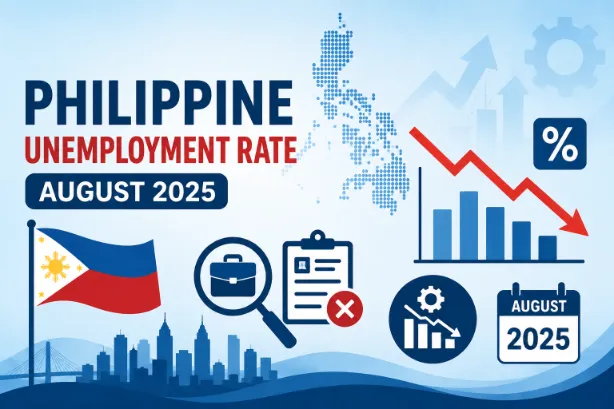
  • Philippine Unemployment Rate August 2025

    The Philippine unemployment rate in August 2025 stood at 3.9%, according to the Philippine Statistics Authority (PSA). The result marked an improvement from 4.0% in August 2024 and a substantial decline from 5.3% in July 2025. The official Labor Force Survey estimated that approximately 2.03 million Filipinos were unemployed during the reference period.

    The August result also showed a strong month-to-month recovery in several major labor market indicators. Employment increased, labor force participation rose, and underemployment declined. Together, these figures provide a broader picture of employment conditions in the Philippines beyond the unemployment rate alone.

    Philippine Unemployment Rate Reached 3.9% in August 2025

    The PSA reported that the unemployment rate fell to 3.9% in August 2025. Under the official statistical definition, the unemployment rate represents the proportion of unemployed persons within the total labor force. The labor force includes people aged 15 and over who are either employed or unemployed and actively part of the country’s labor market.

    The August 2025 figure can be viewed alongside recent results:

    Period Unemployment Rate
    August 2024 4.0%
    July 2025 5.3%
    August 2025 3.9%

    This means the unemployment rate declined by 1.4 percentage points from July 2025 to August 2025. Compared with August 2024, the rate was lower by 0.1 percentage point.

    While percentage changes provide a useful overview, the number of people involved is equally important. The PSA estimated that 2.03 million people were unemployed in August 2025, compared with 2.59 million in July 2025 and 2.07 million in August 2024.

    Employment Rate Rose to 96.1%

    The unemployment data were accompanied by an employment rate of 96.1% in August 2025. This was higher than the 94.7% employment rate recorded in July 2025 and slightly above the 96.0% rate in August 2024.

    The number of employed Filipinos was estimated at 50.10 million in August 2025. That represented an increase from approximately 46.05 million in July 2025 and 49.15 million in August 2024.

    Employment rate and unemployment rate should be read together. A lower unemployment rate is generally positive, but it does not always provide the complete picture of labor market conditions. Changes in labor force participation can also affect the result, which is why official employment analysis examines several indicators at the same time.

    Labor Force Participation Increased

    The labor force participation rate reached 65.1% in August 2025, compared with 60.7% in July 2025 and 64.8% in August 2024. The PSA estimated that 52.13 million Filipinos aged 15 years and over were part of the labor force during August.

    Labor force participation measures the share of the working-age population that is either employed or unemployed. Someone who is not working and is also not participating in the labor market is generally not counted as unemployed under the standard labor force measurement.

    The rise in participation during August is therefore an important part of the overall employment picture. More people were participating in the labor market, while the unemployment rate also moved downward.

    Underemployment Fell to 10.7%

    Another major indicator was the underemployment rate, which fell to 10.7% in August 2025. This was below 14.8% in July 2025 and 11.2% in August 2024.

    The PSA defines underemployed persons as employed people who want additional hours of work, an additional job, or a new job with longer working hours. This measurement matters because having a job does not necessarily mean that a worker has sufficient hours or the level of employment they are seeking.

    Approximately 5.38 million of the 50.10 million employed persons were classified as underemployed in August 2025.

    The decline in underemployment, alongside the fall in unemployment, suggests that the August labor market improvement was not limited to a single headline indicator.

    Which Sectors Accounted for the Largest Share of Employment?

    The services sector accounted for the largest share of total employment at 61.5% in August 2025. Agriculture represented 20.4%, while industry accounted for 18.1%.

    Among the major subsectors, the largest shares of employment were found in:

    • Wholesale and retail trade, including repair of motor vehicles and motorcycles: 20.2%
    • Agriculture and forestry: 17.4%
    • Construction: 10.5%

    The PSA also reported notable annual increases in employment in areas such as construction, fishing and aquaculture, and administrative and support service activities.

    These sector-level figures help explain why the national unemployment rate should not be viewed in isolation. Employment conditions can differ significantly between industries, occupations, regions, and groups of workers.

    labor market

    Youth Employment in August 2025

    For Filipinos aged 15 to 24, the employment rate reached 88.3% in August 2025, compared with 81.9% in July 2025 and 88.0% in August 2024. The PSA estimated that approximately 5.92 million young people were employed during the month.

    Youth underemployment remained an important issue, however. About 678,000 employed young people were classified as underemployed, resulting in an underemployment rate of 11.5% among employed youth.

    This distinction demonstrates why employment statistics need to be interpreted carefully. A high employment rate can coexist with concerns about working hours, job quality, income stability, and opportunities for workers seeking more suitable employment.

    August 2025 Compared With Earlier Labor Market Trends

    The August 2025 unemployment rate of 3.9% was close to the relatively low unemployment levels recorded in the Philippines during the post-pandemic period. For context, the PSA’s annual labor statistics show an unemployment rate of 10.3% in 2020, followed by 7.8% in 2021, 5.4% in 2022, 4.4% in 2023, and 3.8% in 2024.

    This longer-term pattern shows the substantial recovery of the Philippine labor market after the severe employment disruption associated with the COVID-19 pandemic.

    However, monthly labor statistics can change because of economic conditions, seasonal employment patterns, weather events, agricultural cycles, and shifts in labor force participation. For that reason, a single monthly result should be considered alongside previous months and year-over-year comparisons.

    What Does the 3.9% Unemployment Rate Mean?

    An unemployment rate of 3.9% does not mean that only 3.9% of all Filipinos were without jobs. The official calculation applies specifically to the labor force.

    The basic formula is:

    Unemployment Rate = Unemployed Persons ÷ Total Labor Force × 100

    The PSA uses this methodology to measure the proportion of people in the labor force who were unemployed during the survey period.

    This is also why labor force participation is important. People who are outside the labor force are not automatically counted as unemployed simply because they do not have a job.

    For readers assessing the Philippine unemployment rate in August 2025, it is useful to examine four connected indicators:

    1. Unemployment rate: 3.9%
    2. Employment rate: 96.1%
    3. Labor force participation rate: 65.1%
    4. Underemployment rate: 10.7%

    Taken together, these indicators provide a more complete view of labor market conditions than the unemployment rate by itself.

    FAQ

    What was the Philippine unemployment rate in August 2025?

    The Philippine unemployment rate was 3.9% in August 2025, according to the Philippine Statistics Authority (PSA). This was lower than the 5.3% recorded in July 2025 and slightly below the 4.0% rate in August 2024.

    How many Filipinos were unemployed in August 2025?

    Approximately 2.03 million Filipinos were unemployed in August 2025. These individuals were part of the labor force but did not have employment during the survey reference period.

    What was the employment rate in the Philippines in August 2025?

    The employment rate reached 96.1% in August 2025. Around 50.10 million Filipinos were employed during the month.

    What was the underemployment rate in August 2025?

    The Philippine underemployment rate was 10.7% in August 2025. Underemployment refers to people who already have jobs but want additional working hours, another job, or better employment opportunities.

    Did the Philippine unemployment situation improve in August 2025?

    Yes. The unemployment rate declined from 5.3% in July 2025 to 3.9% in August 2025. The number of employed Filipinos also increased, while the underemployment rate fell from 14.8% to 10.7%, indicating improved labor market conditions.

  • SSS Pension Requirements For Voluntary Members

    SSS Pension Requirements For Voluntary Members

    You work, earn, help the family, maybe send your kids to school, but who takes care of you when you’re older? That’s where SSS pension comes in. If you’re a voluntary member, meaning you’re paying SSS on your own (no employer involved), this guide is for you.

    This isn’t some “Google-style” article. This is the same advice your kuya, tito, or kapitbahay would give you after years of paying SSS themselves.

    What Exactly is a Voluntary Member?

    A voluntary member is someone who decides to keep paying SSS even without a regular employer.

    Let’s say you quit your job to start a small business. Or maybe you’re an OFW. Maybe you’re just selling online now. As long as you’re paying your SSS monthly on your own, you’re a voluntary member.

    It’s simple. No fancy terms needed.

    SSS Pension Requirements For Voluntary Members

    Why Bother Paying SSS If You’re No Longer Employed?

    Because let’s be honest, nobody wants to get old broke.

    If you want at least a guaranteed monthly income when you’re 60 or 65, then the SSS pension is your fallback.

    It’s not going to make you rich, but it’s better than zero. Think of it as extra money for medicines, groceries, and everyday expenses when you no longer work full-time. Aside from retirement support, SSS also provides financial help for mothers. You can check the 70k maternity benefit guide to learn how members can claim assistance during pregnancy.

    Here’s What You Need to Claim Your SSS Pension (Voluntary Members)

    Forget the complicated blogs online. Here’s the straightforward list:

    Requirement Details
    Age 60 years old for early retirement. 65 if you want to wait for the mandatory one.
    Contributions At least 120 monthly payments (10 years total).
    Active SSS Number Your SSS account must be updated and active.
    Valid ID Any government-issued ID (UMID, passport, driver’s license, etc.).
    Bank Account This is where SSS will send your pension. No more cash pick-ups.

    What Documents Do You Need?

    Here’s your checklist, no fluff, just the real deal.

    • Retirement Claim Application Form
      Get this online at My.SSS or from the SSS branch.

    • Valid ID
      Preferably UMID. If not, use a passport, driver’s license, voter’s ID, or PRC ID.

    • Birth Certificate
      PSA copy if possible. If not, your baptismal certificate works—just make sure it’s official.

    • Marriage Certificate
      Only if you’re married. If not, skip this part.

    • Proof of Contributions
      Log in to My.SSS and check if you’ve reached 120 months. Print a copy if you want.

    • Bank Enrollment
      You need to enroll your bank account in My.SSS. SSS doesn’t pay by cash anymore.
      Accepted banks: BDO, BPI, Landbank, Metrobank, PNB, almost all major banks are okay.

    How Do You Apply?

    You’ve got two ways:

    1. Online Application

    If you hate long lines (who doesn’t?), just apply online.

    Steps:

    1. Go to sss.gov.ph.

    2. Log in to My.SSS.

    3. Click “Apply for Retirement Benefit” under E-Services.

    4. Fill in the form.

    5. Upload your documents.

    6. Submit and wait for their text or email update.

    2. Walk-In Application

    Prefer talking to a real person? No problem. Go to your nearest SSS branch.

    Heads-up:
    If you don’t like waiting, go early. Before 9 AM is your best bet, especially in crowded branches like Makati, Quezon City, Cebu, or Davao.

    How Much Will You Actually Get?

    Your pension depends on how much you paid and how long you paid.

    Here’s a rough idea:

    Monthly Contribution Possible Pension (Monthly)
    ₱1,000 per month Around ₱2,000 – ₱3,000
    ₱2,000 per month Around ₱3,500 – ₱5,000
    ₱3,000 per month Around ₱5,000 – ₱8,000
    Max Contribution Can reach ₱20,000 or more

    What If You Don’t Have 120 Months?

    If you didn’t reach 10 years of payments, you won’t get the monthly pension.

    But you’ll still get a lump sum refund. That’s basically all the money you paid, plus some small interest.

    Real Talk FAQs

    I Stopped Paying for Years. Can I Still Apply?

    Yes.
    Even if you stopped paying for a long time, as long as you completed 120 total payments, you’re still eligible.

    What About OFWs?

    Same process.
    OFWs usually pay as voluntary members too. Just make sure your SSS account is updated.

    Can I Get Both GSIS and SSS Pension?

    If you worked both government and private jobs before, you can claim from both.
    But you need to apply for each separately.

    When’s the Earliest I Can Apply?

    You can apply as early as 60 years old.
    If you want to wait for the full retirement, that’s at 65.

    Last Reminder: Secure Your Future Now

    If you’re running a business, freelancing, selling online, working abroad, or just hustling on your own—you need to prepare for retirement.

    Don’t wait until you’re 60 to figure this out. Start now. Finish your 120 payments. Pay more if you can, so your future pension is bigger.

  • How To Avail 70k SSS Maternity Benefits?

    How To Avail 70k SSS Maternity Benefits?

    Welcoming a new baby is one of life’s most exciting milestones. But it can also bring financial pressure, especially if you’re planning to take time off work. Thankfully, the Social Security System (SSS) of the Philippines offers a maternity benefit of up to ₱70,000—a financial lifeline for qualified mothers.

    Whether you’re a first-time mom or adding to a growing family, this guide will walk you through how to claim the maximum ₱70,000 SSS Maternity Benefit, including eligibility criteria, how benefits are computed, step-by-step filing instructions, and practical tips.

    What Is the SSS Maternity Benefit?

    Maternity Benefit is a cash allowance granted to a female SSS member who is unable to work due to childbirth, miscarriage, or emergency termination of pregnancy. The benefit is meant to replace income during the maternity leave period.

    Since the Expanded Maternity Leave Law (RA 11210) took effect in March 2019, qualified members are entitled to:

    • 105 days of paid leave for live childbirth (normal or cesarean)

    • 120 days for solo parents

    • 60 days for miscarriage or emergency termination of pregnancy

    The benefit can now reach up to ₱70,000, depending on your monthly salary credit (MSC). If you’re already an active SSS member, understanding your pension release dates is just as important as claiming maternity assistance, especially for long-term financial planning.

    How To Avail 70k SSS Maternity Benefits

    Who Is Eligible?

    To qualify, you must meet all of the following:

    • Be a female SSS member, whether employed, voluntary, or self-employed

    • Have paid at least 3 monthly contributions within the 12-month period immediately before the semester of childbirth or miscarriage

    • Have notified SSS (and your employer, if employed) of your pregnancy

    • Not be currently employed in the public sector or receiving maternity benefits from another source

    How Is the ₱70,000 Maternity Benefit Computed?

    The actual amount you’ll receive depends on your Monthly Salary Credit (MSC) and the number of leave days you’re entitled to. The maximum MSC is ₱20,000 as of 2025.

    Here’s a simplified formula:

    Daily Maternity Allowance = (Highest 6 MSCs / 180) x 100%
    Total Maternity Benefit = Daily Allowance x Number of Leave Days

    For example, if you’re earning ₱20,000/month:

    • 6 MSCs = ₱120,000

    • ₱120,000 / 180 = ₱666.67/day

    • ₱666.67 × 10⁵ days = ₱70,000.35

    That’s how you can reach the ₱70,000 maximum.

    How To Avail the ₱70,000?

    Step 1: Notify SSS of Your Pregnancy

    • Employed members must inform their employer and submit the SSS Maternity Notification Form along with proof of pregnancy (e.g., ultrasound report or doctor’s certification).

    • Voluntary/self-employed members must notify SSS directly through:

      • The My.SSS portal

      • Or by visiting an SSS branchDeadline: Preferably within 60 days from conception

    Step 2: Make Sure You Have Paid the Required Contributions

    • Log in to your My.SSS account to check your contributions.

    • You must have at least 3 contributions in the 12-month period before the semester of delivery/miscarriage.

    Tip: If you’re expecting in October 2025, your semester of contingency is July–December 2025. Your qualifying contributions should fall within July 2024 to June 2025.

    Step 3: File the Maternity Benefit Application

    Once you give birth or have a qualifying event (e.g., miscarriage), you’ll need to file for the benefit.

    Submit:

    • SSS Maternity Benefit Application Form (MAT-2)

    • Valid ID

    • Child’s birth certificate (or death certificate in cases of miscarriage)

    • Employer certification (if applicable)

    • Proof of solo parent status (if applying for 120-day leave)

    You can file via:

    • My.SSS online portal

    • Drop box or over-the-counter at an SSS branch

    Step 4: Wait for Approval and Release

    • Processing time: 2–4 weeks, depending on the completeness of documents

    • Payment is released via your registered SSS UMID ATM, bank account, or electronic payment channels

    Frequently Asked Questions

    1. Can I still receive maternity benefits if I’m unemployed?

    Yes—voluntary or self-employed members who meet the contribution and notification requirements are eligible, even if they’re not employed at the time of delivery.

    2. How many times can I avail of the benefit?

    There’s no limit to the number of times you can avail it. However, you must meet the qualification criteria each time you apply.

    3. Is the maternity benefit taxable?

    No, the SSS maternity benefit is tax-exempt under Philippine laws.

    4. What happens if I fail to notify SSS before delivery?

    Notification is crucial. Failure to notify may result in denial of your benefit claim, especially for voluntary and self-employed members.

    5. Can I receive both SSS and employer maternity benefits?

    If you’re employed, the SSS pays your employer, who in turn reimburses you during your maternity leave. You do not receive double benefits.

    Claiming the ₱70,000 is your right as a contributing member, and it can be a critical source of financial support during your maternity leave. With proper planning, timely notification, and up-to-date contributions, you can ensure you receive the maximum amount you’re entitled to.

    As you prepare to welcome your child, let SSS support your journey with peace of mind and financial stability. Start by checking your eligibility today, and don’t miss your chance to claim this vital benefit.

  • SSS Salary Loan Calculator

    [sss_loan_calculator]

    Are you planning to apply for an SSS Salary Loan? Want to know how much you can borrow and what your monthly payments will be? Our SSS Salary Loan Calculator makes it easy to estimate your loan amount and payment schedule based on your salary history and contributions.

    How to Use the Calculator

    Just follow these simple steps:

    1. Enter your total number of monthly contributions.

    2. Enter how many contributions you made in the last 12 months.

    3. Provide your current age.

    4. Choose whether you want a 1-month or 2-month loan.

    5. Input your monthly salary credits for the past 12 months, separated by commas.

    6. Optionally enter the loan amount you want to apply for.

    7. Add any existing SSS loan balance (if any).

    8. Confirm your eligibility by checking the box.

    9. Hit the Calculate button to view results!

    The loan calculator helps with short-term needs, but the SSS pension retirement gives a clearer picture of your lifetime benefits as a member.

    What Is the SSS Salary Loan Calculator?

    This tool allows users to:

    • Check their loan eligibility.

    • Calculate estimated loan amount based on salary credits.

    • Get monthly payment breakdown including interest.

    • Adjust inputs like contributions, salary history, and more.

    • Instantly see if they qualify based on SSS requirements.

    It’s simple, fast, and free to use right on your website!

    Features Included

    • Monthly contribution inputs

    • Salary history input (last 12 months)

    • Loan type selection (1-month or 2-month loan)

    • Option to include outstanding previous loan balance

    • Monthly amortization calculated with 10% interest over 24 months

    • Easy-to-use design with a confirmation checkbox for eligibility

    Why Use This Calculator?

    The SSS Salary Loan process can be confusing. This calculator helps you:

    • Know what to expect before applying

    • Avoid borrowing more than you can pay

    • Plan your budget around your loan

    • Get accurate numbers in seconds—no need for manual computation